Showing posts with label Education. Show all posts

Monday, November 18, 2013

e-Pals

It is very important to expose our students to people from different parts of the world to gain a better cultural understanding and a broader view of the world. One website that allows this connection to be possible is ePals.


This website aims to create a network of Global Citizens and Digital Citizens. This website serves grades pre-k-12. Schools from all over the world participate in this website. The website provides schools with e-mails, classroom matches to find partners to work with through the website, media galleris and forums for teachers students and their families. Teachers have the ability to monitor their students to ensure safety on the internet. Classrooms can participate in projects where they collobrate with partners from somewhere else in the world. This allows students to gain perspectives from other cultures while engaging in educational experiences as well as cultural diversity.

The website offers many motivating components for students to participate in activies such as Games, In2Books Clubhouse (only for US citizens), Smithsonia ePals and much more! Cricket is a component of the website that teachers can subscribe to for their classrooms. Cricket is a chidlren's magizine thats mission is to "inspire children to a lifelong love of reading and writing". Cricket contains a "variety of books, crafts, toys, and gifts" that make the learning process fun for children.   There are also rescourses for teachers such as a focus on the common core which is significant for all teachers in the United States.

This website provides an authentic way to incorporate educational topics with a fusion of cultural diversity. It is not possible for all students in our classroom to have the resources to meet those from another culture. It is our job as teachers to encourage this bridge to those around the world and provide them with the resources to do so. It is important to encourage our students to be not only citizens of the United States but global citizens.


Wednesday, November 6, 2013

Go Animate!


The website Go Animate allows users to create short comics with pre-made characters, scenes and objects. These scenes are highly customizable and you can even create what your characters to say and what they sound like. There is a free version of this website as well as a paid portion. This tool can be great for ESL classrooms!

This website can allow students to practice with language through the use of technology. Students can present a number of topics using Go Animate. Some ideas include: historical presentation, retelling of a story, telling a personal story, or many more. This website will allow students to work with language but also have fun. Using this in a classroom would be highly motivating for students because it will allow them to individualize their comics which can be both educational and fun. This website allows you to either type your speech or record your own voice which is a great function to differentiate instruction among students. Language learners can learn through both typing what they want to say and listening to the characters say it, or practicing speaking use their own voices. This tool can be used to check proficiency levels in speaking. I would use Go Animate in any content area to reinforce topics. This website is also very fun for both teachers and students!

Here is an example of a Go Animate video.

A Walk Outside by lrlichtenberger on GoAnimate
This scenario can be used in a classroom to check listening comprehension among students. Following this video teachers can give an assessment to check for understanding.

Monday, October 7, 2013

Microblogging

Until this course, I have only used Twitter for social networking, or so I thought. As I scroll through my twitter feed on my personal account I notice that I follow friends, celebrities, news sources, and politics. I have realized that I use twitter not only for social networking and catching up with friends, but as a way to stay informed on what is going on in my area and the world. If I can use it to follow politics then why not use it to follow educational topics as well? Through my professional twitter account I have noticed the power twitter can hold in an educational setting.

The article, "Over25 Ways To Teach With Twitter" sheds light on the value of microblogging in the classroom. This article suggests 25 ways for teachers to use twitter a few include; asking for recommendations, writing a book list, sharing new studies, starting a twitter book club, and to posting requests for people to speak at your events. These ideas can go both ways, as a teacher you can write a book list and also view other educators book lists for idea. Twitter can connect you with educators from all over the world at all different steps in their educational path. This can make a diverse array of opinions available to you and enhance your educational knowledge.

The article, "Teaching With Twitter" also provides suggestions that are more geared toward students. One of the suggestions in this article is to post "twitter pals" where students find a penpal via twitter from another culture and share ideas with them. This can be very useful for ESL students to learn about American culture as well as practice utilizing the English Language. This can also help connect students with other students in their school to get to know them on a personal level and have interactions with them.

I think that microblogging can be very useful in an academic setting as long is it is utilize properly and safely. The internet is a big place, which can be a good thing or a bad thing.


Monday, September 30, 2013

Classroom 2.0


A great resource for educators interested in technology is classroom 2.0! This site is a social networking site for "Social Media, and Participative Technologies in the classroom." This site provides virtual conferences to enhance educators knowledge of technology. This website allows its members to interact with one another through the means of social networking. It is a great way to meet fellow educators and enhance your knowledge with perspectives from all over the world with varying degrees of experiences and interests. There are different groups that you can join to interact with others who share similar interests. This is a great way for any practicing teacher or teacher candidate to enhance their knowledge and expose themselves to new practices.

A learner is like an apple


A learner is like an apple. Apples come from different places, were taken care of in different ways, are different kinds of shapes and colors, some have bruises, some are crispy, some are sweet. Apples, like learners are all different. Learners can come from different places, prior to schooling were taken care of in different ways, learners are all different shapes and colors, some learners have different features than others, and they all have different kinds of personalities.


In the article by Siemen, he quotes Landuar and Dumais (1997) in their statement that "people have much more knowledge than appears to be present in the information to which they have been exposed." This statement is very important to remember about our learners in the classroom. Referring back to what was said about apples, when we see an apple in the grocery store and bring it home, we sometimes forget that this apple has been on a journey that we are unaware of. The apple could have been dropped on the ground, it could have been licked by an animal, or it could have been sitting in the grocery store for days. Looking at an apple you might forget about all of these factors, just like our learners. Learners have gone through journeys that affect their present learning in our classroom. We must acknowledge the interactions they have had because it shapes them as a learner and may have a heavy influence on their knowledge base. Although learners may not be exposing all of their capabilities to us in the classroom, as educators, we can never make assumptions about our learners knowledge base without challenging them to show it to us.


In his video "The Network is Learning" Siemen states, "What we know today is not as important as our ability to stay current. If what I know today is going to change because knowledge changes rapidly, if I am not continually learning I am becoming obsolete in my field." Classroom teachers have to ensure they are staying current in the field so they can be changing with the tides and continually learning, just as our students are. We need to continue to expose our learners to knew knowledge bases and as educators we need to utilize the most current tools to do so to make learning meaningful. Technology is a great resource to stay up to date in the field and to expand our knowledge base. Our students are growing, and changing as time changes. We need to make sure we water our apples with the best water so they can grow nice and ripe.


Sunday, September 22, 2013

DIIGO vs. Scoop it


DIIGO and Scoop it are both sites that can be used as an alternative to "bookmarking" websites that people commonly do in their browsers. Both websites make sharing interests on the internet more convenient. Below is a table comparing the two and the features that they offer.

You can highlight texts and when you access the website at a later date the saved highlights will still be present.

Multiple tags can be used.

You can follow others, they can follow you.

You can post comments on the users site.

You are not offered suggestions for related articles.

You cannot highlight texts on Scoop it.


Multiple tags can be used.


You can follow others, they can follow you.


You can post comments on the users site.

You are offered suggestions for related articles.


According to my personal opinion, there are pros and cons to each of these websites. I see DIIGO as more of a academic research tool. It seems more to be for those who want to use outside sources from websites complied into one page, just like the "bookmarking" feature on internet browsers. DIIGO's ability to snapshot websites as well as highlight texts are very useful resources that are not found on Scoop it. Although Scoop lacks that particular feature, I think overall Scoop it is a better website to fit my needs. The interface of Scoop it is more attractive, it is easy to navigate, and it has more of a social networking feel. In my opinion, it is easier to follow topics and users. Scoop it reminds me of a website I often use called pintrest. I would continue to use Scoop it past this class because I think it is a great resource for teachers.


Shown above are screenshots of the two websites to get an idea of what their interface looks like.

Monday, September 16, 2013

A Technological Revolution Is A Means For An Educational Revolution


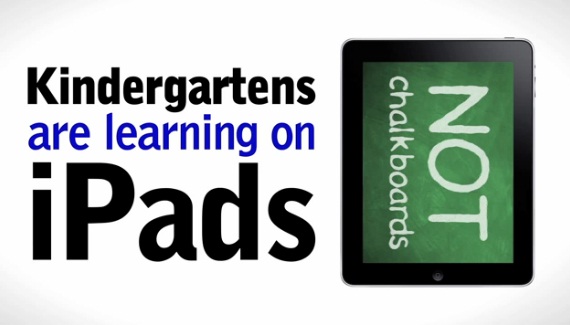
This video addresses the issue of the classroom changing and how educators need to adapt to this change. As educators, we learn to differentiate instruction, and we know that all learners are different, no two learners learn the same way. This video questions why we put 25 kids in a classroom for 6 hours a day and teach to them all on the same level even though we know they all learn differently. The classroom has not changed much from 100 years ago, but in today's day in age our resources have grown immensely. As educators we need to take advantage of the world around us and teach our students how to function in the modern world, we must use these modern resources. Students are surrounded by technology and live in the technological age, we must teach to their interests in order to make our instruction relevant.The video leaves us with a very significant question, "Are we preparing students for my age or for theirs?". This is an important question we must ask ourselves as teachers. Even though technology may not be every teachers comfort zone, it is our students. Are we teaching for ourselves to comfortable, or for them?


This video addresses the social media revolution that is taking place in our world. It expresses the ideas of how important social media has become in the new age. Social media not only effects who we are online, but also our offline behavior. Social media is a means of acquiring information, meeting new people, and staying in touch with old friends. The limits to social media and the aspects of the internet are almost endless. As educators, this information is very relevant because we need to take advantage of all that social media has to offer and how it can enhance our learners. The amount of users on twitter and facebook are bigger than populations of some countries. There is a great chance that our students will be utilizing these social outlets and we should be generating our instruction to incorporate what our students are doing online. Social media is all around us, so why not bring it into the classroom?